
Are Your Leaders Trained to Navigate Complexity?


HR and L&D professionals are being asked to prepare leaders to operate with confidence in conditions that no one fully understands.
This challenge goes beyond introducing another tool or framework. It requires helping individuals develop the capacity to navigate ambiguity, filter through noise and translate complexity into direction their teams can act on.
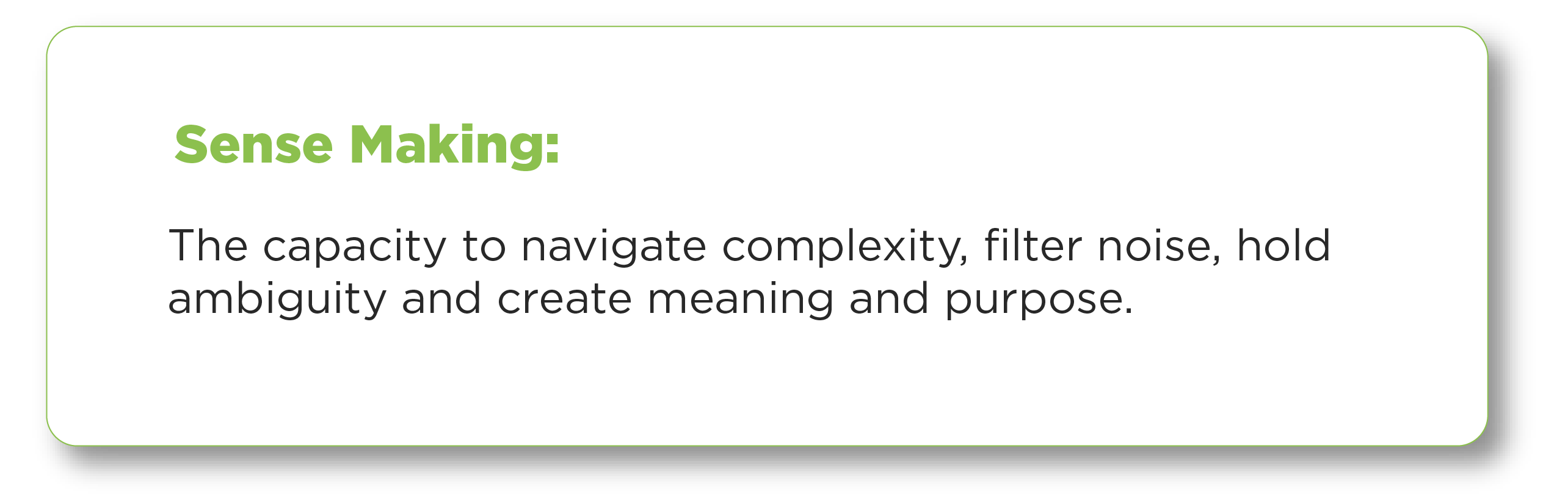
That competency is called sense-making.
The leadership gap hiding in plain sight
Last year, only 20% of HR professionals said they had internal candidates ready to fill the most critical leadership positions. When it comes to current managers, only 4 in 10 executives say their organizations have high-quality leaders.
The gap is rarely due to pipeline. It’s a preparation challenge.
Leadership training is missing in many companies. Even when it’s present, most programs aren’t built for today’s workplace environment. They were designed for an era of execution instead of interpretation.
The ability to be a sense-maker is essential yet often overlooked in current market conditions. By absorbing the unknown and sorting through fast-moving signals, sense-makers give their teams enough clarity to keep moving — even when the future seems unclear or uncertain.
As AI reshapes roles and markets shift without warning, leaders need to get comfortable with the idea that they may not have the perfect answer. The real need is the ability to help people understand where they are now and what to do next.
Here’s how to start building this capacity in your organization.
The sense-maker checklist
Invite your executives and managers to use this self-assessment to rate their effectiveness on a scale of 0-5 (0 being a quality they lack and 5 being a skill they believe to have mastered). Make sure they provide one recent concrete example for each before selecting their ranking:
- Identifies patterns and connections others often miss
- Sets meaningful, realistic priorities when everything feels urgent
- Frames change as navigable rather than threatening
- Acknowledges the unknown honestly
- Translates mixed or unclear signals into straightforward, relevant team context
- Anchors daily work to a broader organizational vision and shared purpose
- Identifies what drives each teammate and aligns their work to enhance motivation
- Guides their team in grounded decision-making
Once you’ve collected responses, look for where leaders feel least confident. Those gaps are your L&D roadmap.
Putting sense-making into action
For another simple, high-impact way to strengthen leadership in VUCA conditions (volatility, uncertainty, complexity and ambiguity), hear five tips from our Co-owner, Annie Browning, in the video above and try the 60-minute group exercise below. It helps turn murky workplace challenges into a structured, actionable conversation with your leadership team.
The Complexity Canvas
- Present your leadership cohort with a real, current challenge — such as a market shift, reorganization or an AI rollout — something with uncertainty attached
- Map it on a whiteboard or chart paper across four quadrants: What we know / What we don’t know / What we can control / What we can’t control
- From the “know + control” quadrant, identify three actions the group can take immediately
- Debrief with one question: How does this framework change how the team feels about the challenge?
The final step is the point of the activity. The “canvas” doesn’t resolve uncertainty; however, it makes it workable. Individuals who embrace this practice will stop waiting for full clarity before acting and learn to move with what they have, bringing their teams along with them.
That’s sense-making in action. It’s the muscle that separates leaders who build trust in volatile conditions from those who lose it.
The revenue case for alignment under complexity
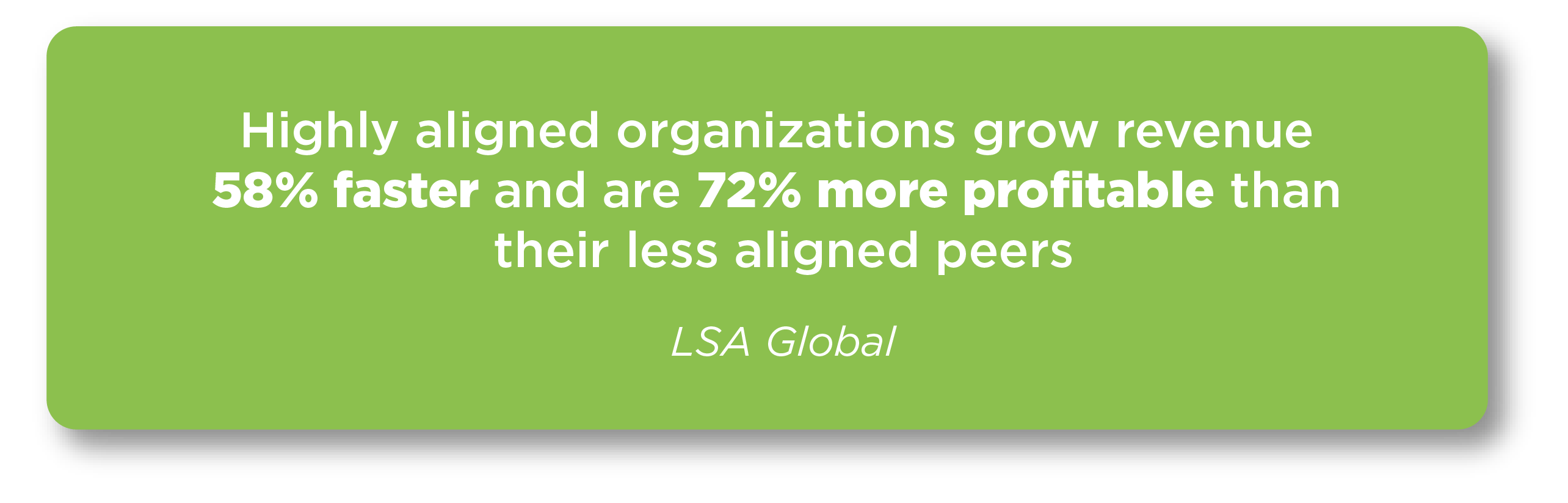 Alignment drives results, and we can’t use ambiguity or uncertainty as an excuse for failing to provide our teams with guidance. You can positively impact your company’s financial future by investing in sense-making. When you can connect leadership capability to revenue impact, the conversation shifts from a learning initiative to a business necessity.
The next move is yours
If you’re designing leadership development programs, remember: complexity isn’t going away. People who can create meaning out of continuous change will become indispensable.
The leadership trainings that matter now empower participants to hold uncertainty without freezing, generate direction without having all the answers and keep staff moving without losing trust.
Sense-making is a trainable capability, and it may be one of the wisest investments organizations can make right now.
FAQs
Q: Why do so many leadership development programs fail to prepare leaders for complexity?
A: Most programs were built for execution, not interpretation. They focus on delivering frameworks or tools that often overlook the capacities leaders need to navigate ambiguity, filter competing signals and turn uncertainty into direction.
Q: What are some of the most important leadership skills in VUCA conditions?
A: Skills like sense-making, emotional intelligence, communication and systems thinking are a few of the top competencies leaders need to be successful in uncertain, volatile environments.
Q: What is “sense-making” in leadership?
A: Sense-making is the ability to absorb incomplete, fast-moving or conflicting information and translate it into clear direction that teams can act on. It’s what allows leaders to reduce noise, surface patterns and create enough clarity for people to move forward even when the future is unclear.
Q: Why is sense-making becoming a critical leadership capability now?
A: Leaders are operating in VUCA environments shaped by market volatility, AI-driven change and shifting priorities. In these conditions, organizations need leaders who can interpret what is happening in real time to help their teams understand what it means for their work.
Q: What does it look like when organizations struggle with VUCA conditions?
A: It often shows up as reactivity, competing priorities and teams waiting for direction that never fully arrives. Leaders may over-communicate without increasing clarity, or struggle to connect strategy to day-to-day decisions in a meaningful way.
Q: Can sense-making actually be developed, or is it an innate leadership trait?
A: Sense-making is a trainable capability. Leaders develop it through structured reflection and trainings that help them repeatedly practice translating complexity into action and making sound decisions with ambiguous information. Peer problem-solving, simulations and facilitated conversations help develop this muscle over time, especially when embedded into everyday work.

Want to build sense-making — and eight other in-demand leadership capabilities — in your training programs? Download Leading Forward for more ready-to-use activities and integration tips.
 Print This Post